
Take a virtual tour of some of the amazing playground projects Playground Centre has delivered with councils, schools and communities across New Zealand, Australia and around the world.
The bright, bold new edition of Playground Centre’s State of Play Lookbook highlights playgrounds where design thinking and delivery know how come together, from integrated movement spaces and nature play reserves to best in class school playspaces.
For councils, landscape architects, developers and educators, it is a snapshot of how leading playground trends are being translated into buildable designs, smart equipment choices and fun, memorable and benefit-rich play experiences.
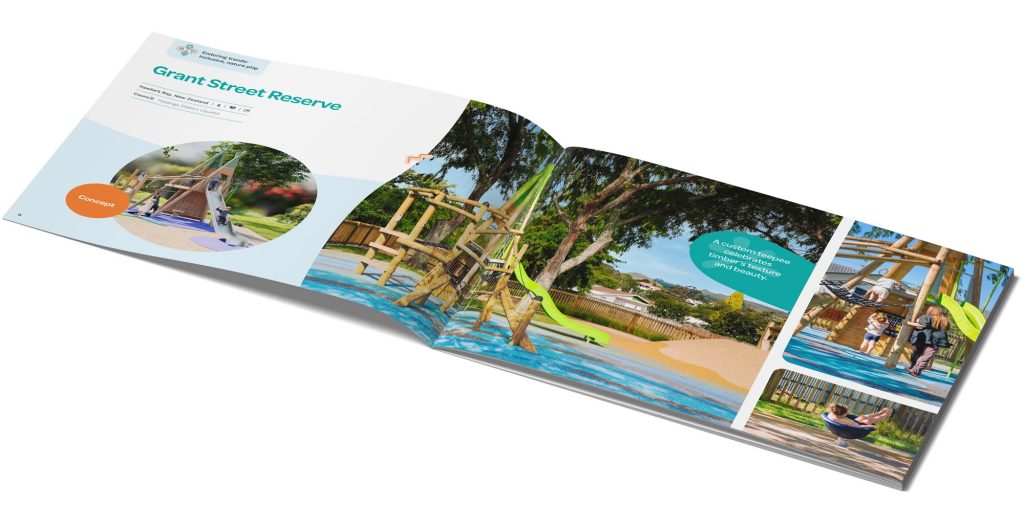
Real playground projects, real communities, real impact
Playground Centre’s annual publication, State of Play – now in its 13th year – is more than a project showcase; it is a window into what’s shaping the way children and communities are playing around the world right now.
“State of Play is about sharing ideas and showing what is possible when playgrounds are thoughtfully planned and purposefully designed,” says Playground Centre CEO, Simon Filleul. “It has become the go-to resource for councils, landscape architects, developers and schools who want to see real examples of best practice playground design in action.”
“This edition features vibrant neighbourhood parks in kid friendly cities, playspaces and play structures that close the ‘teen gap’ in play networks and integrated movement spaces that promote all-ages play, fitness and social time,” Simon says.
“Behind every project is our team of playground design to delivery specialists, working alongside clients to turn ideas into playgrounds that deliver genuine, lasting value for communities.”
Discover the stories behind three State of Play projects
From a revitalised neighbourhood reserve in Hawke’s Bay, New Zealand to a nature play destination in Victoria, Australia and a school playspace in Kuwait, discover the stories behind three of the projects featured in the latest State of Play.
An inclusive neighbourhood park in New Zealand
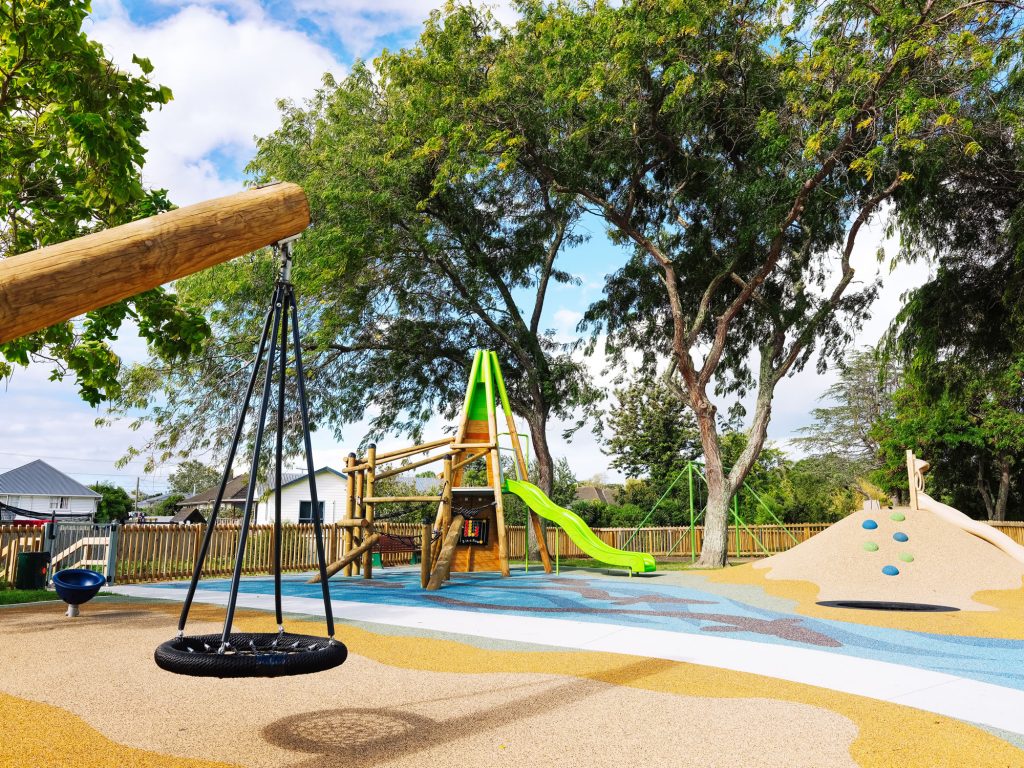
The Grant Street Reserve playground in Havelock North, Hawke’s Bay shows how a neighbourhood park refresh can lift everyday play for local families. Designed and delivered in partnership with Hastings District Council, the upgraded playground blends trusted favourites with new, inclusive play experiences to create more ways to move and play in a compact footprint.
Underpinning the design is a clear focus on inclusive play and environmentally sustainable playspace design. Smooth, soft surfacing made from recycled shoes and tyres supports prams and mobility devices, while wheelchair-friendly options, ground-level spinners, lower climbing sections and sensory elements give more children confidence to join in. Shaded nooks, tactile and scented planting, and quieter corners also offer support for tamariki who need time out from active play. Together, these choices reflect Hasting District Council’s commitment to accessible playgrounds that enhance community life.
A nature play destination in Australia
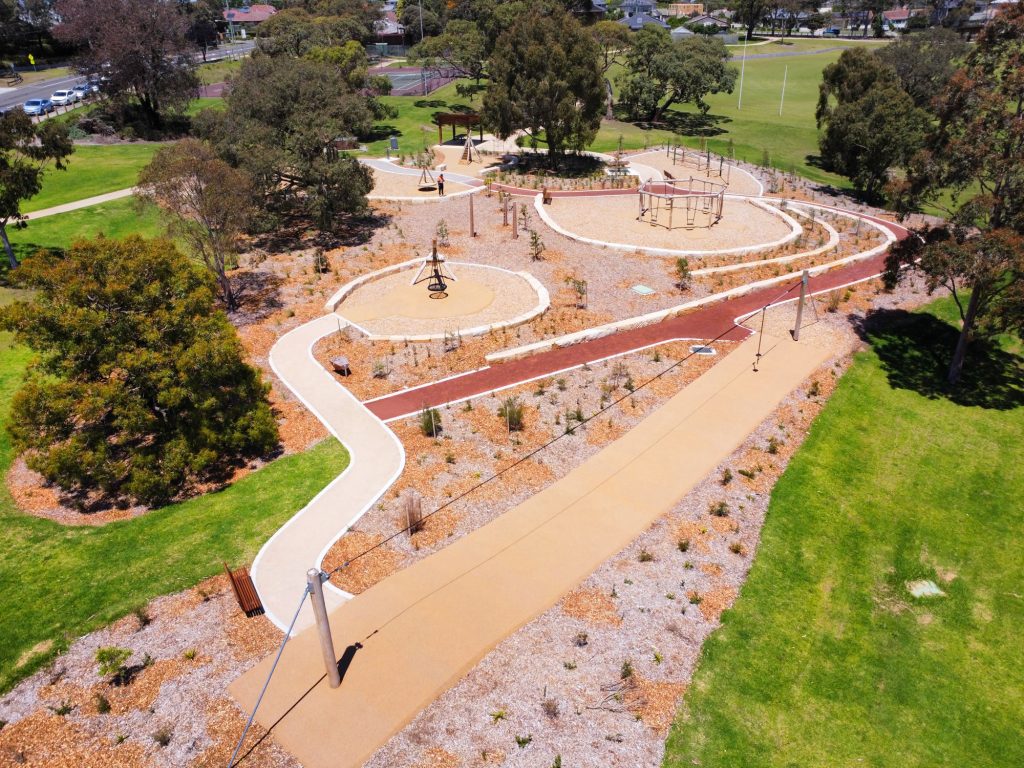
At Barry Powell Reserve in Noble Park North in Victoria, the City of Greater Dandenong set out to replace an ageing existing playground into a nature play destination that could serve a wider catchment. Guided by community consultation, Playground Centre worked with the council and delivery partners to consolidate the existing playground into a larger, district-level space where timber play structures, trees and terrain work together to deliver a one-of-a-kind play experience. The result is an all-ages environment where a treehouse, rope course, flying fox, and multiple swings, are artfully placed amongst rock features, garden beds and looping trails.
Accessible paths and generous picnic, seating and BBQ areas encourage longer visits, while the planting of at least 50 new trees will provide natural shade for parkgoers as they grow. Underpinning the concept is a strong material story, with Playground Centre crafting the majority of the play equipment from Australian plantation-grown hardwood.
This project captures several leading playground design trends: integrated movement and social connection, nature-inspired play, climate responsive comfort and community driven design – woven together through Playground Centre’s playground design and equipment manufacturing expertise.
A playspace for little learners in Kuwait
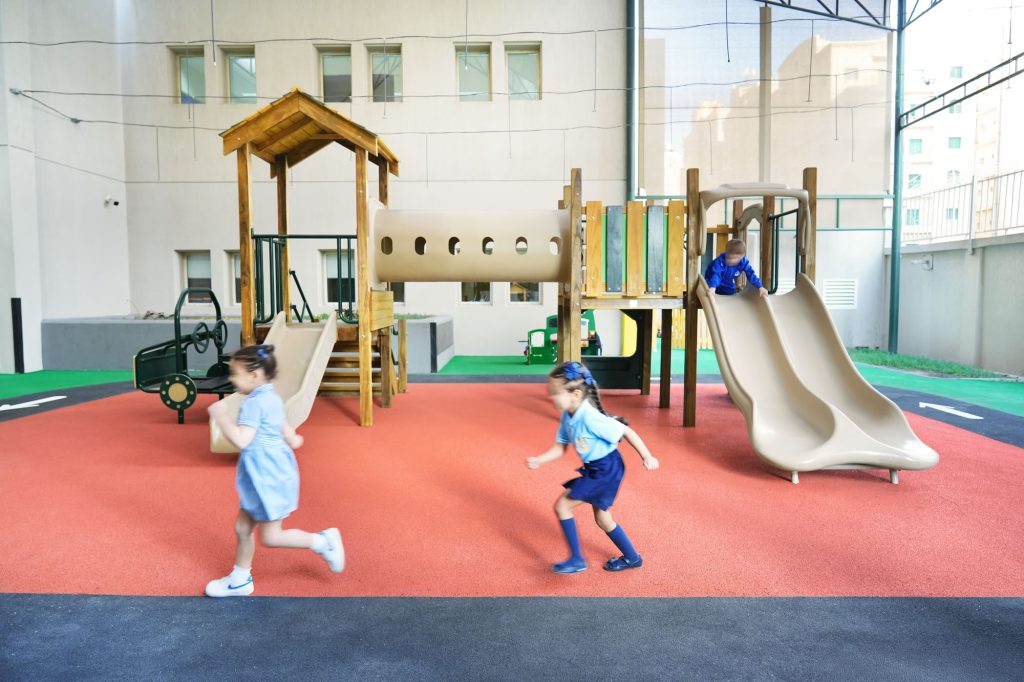
For Al-Bayan Bilingual School in Kuwait, the brief was to design a playspace for preschool-aged children that supported whole child development, not just burn energy between classes. Working with the school and local installation partners, Playground Centre created a dynamic, multi-zoned environment that balances movement, sensory discovery and social interaction within a compact environment.
The State of Play profile shows how climbing, sliding and agility elements sit alongside ground-level play, imaginative features such as musical instruments and interactive play panels, and shaded rest points, so children can choose higher-energy or calmer activities as they need.
This project reflects Playground Centre’s strength in school playground design and its ‘playspaces that do more’ philosophy. Equipment selection and layout are tuned to preschool development, supervision needs and curriculum goals, while robust, climate-appropriate materials address heat, durability and maintenance in a Gulf climate. For international schools and education providers, Al-Bayan Bilingual School offers a clear example of how thoughtful design and tailored equipment packages can create best-in-class school playspaces that support learning, wellbeing and enrolment appeal at the same time.
Download the State of Play Version 13
If you are planning a new playground, upgrading a neighbourhood reserve or developing a school or youth playspace, State of Play is packed with ideas and inspiration from real playground projects in New Zealand, Australia and around the world.
Download or request your copy of State of Play Version 13 here to explore more projects, then connect with Playground Centre’s team to talk about your site, your community and your goals. Together, you can create a playground project that reflects local needs, responds to the latest playground design thinking and delivers lasting benefits for people and place.