
What makes a playspace great?
It’s not simply about the biggest tower or the most equipment. The playspaces people love bring together fun and challenge, movement and imagination, inclusion and connection, safety and durability – all shaped around the people who will use them and the place they belong.
These fundamentals of playground design are the foundation of Playground Centre’s guide, the Great 8™, which shares the eight principles of a best practice playground to support architects, councils, schools and communities involved in playground projects.
What is the Great 8™?
The Great 8™ is a practical framework for planning, designing and reviewing play and recreation spaces. Backed by the latest research and Playground Centre 30-plus years of experience in playground design, it looks at the whole experience, not equipment in isolation – helping project teams identify strengths, gaps and opportunities for greater play value.
Every site, community and brief is different, so the Great 8™ is a flexible foundation for better-informed decisions when designed or upgrading playspaces of all shapes and sizes, in any location. Each principle consists of a range of elements (or criteria), which can be checked and rated, clearly indicating areas for improvement to achieve a best practice ‘green’ rating.
Where can you use the Great 8™?
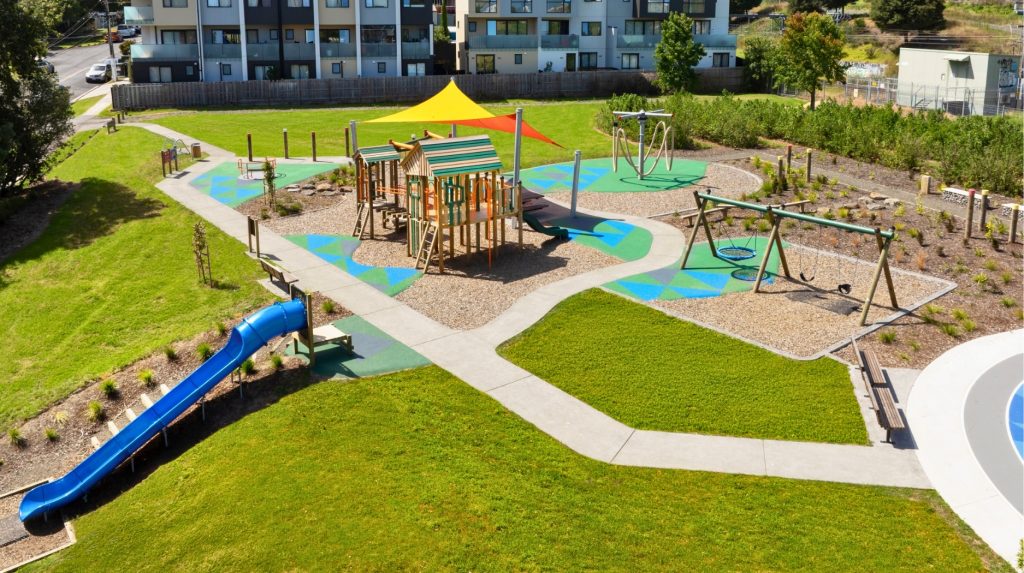
The Great 8™ can be used at different stages of a project – and for much more than starting a playground from scratch.
- Planning a new playspace – establishing a mix of play experiences, users and priorities the design needs to support.
- Upgrading an existing playground – identifying what already works well and where additional play value, accessibility or amenity could make the space stronger.
- Reviewing a playground or wider play network – helping councils and asset managers identify gaps, priorities and opportunities across different sites.
- Shaping a project brief or design concept – giving landscape architects, developers and project teams a common framework for considering play value alongside site, budget and design objectives.
- Supporting consultation and stakeholder conversations – helping communities, schools, clients and project partners discuss what they want the space to deliver.
- Planning for more inclusive participation – considering different ages, abilities, needs and ways of experiencing play from the outset.
The same principles can guide a neighbourhood playground, destination park, school, residential development or community recreation space.
The Great 8™ principles
The eight principles for best practice playground design are:
- Enjoyment & Engagement
Creating opportunities for play and recreation that are fun, engaging and contribute positively to quality of life for individuals and communities. - Inclusive & Accessible
Ensuring people of different abilities, ages, cultures and social backgrounds can access and participate in play. This also means considering the wider experience, including accessible shade, seating, rest and gathering areas. - Sensory Stimulation
Providing sensory experiences that can help build neural pathways, support language and communication, strengthen gross and fine motor skills, develop focus and help manage stress and anxiety. - Social Interaction
Creating opportunities for positive experiences with others through group participation, communication, cooperation, empathy, generosity, negotiation and problem-solving. - Confidence Challenge
Encouraging the body to move in different ways and providing appropriate challenges that help build capability and self-confidence. - Fitness & Agility
Incorporating physical activity into the playspace to support movement, better health and wellbeing. - Sustainability
Considering the playground over its full life – from quality, long-lasting, sustainably sourced or recyclable materials and modular equipment, through to ongoing maintenance that keeps the space safe and inviting. - Safety
Meeting relevant playground and play equipment safety standards and regulations to minimise the risk of injury while supporting enjoyable play.
When the fundamentals come together
The Great 8™ principles are most valuable when considered together. A playspace might combine physical challenge with social opportunities, inclusive access with sensory experiences, or engaging play with durable, sustainable solutions. The balance will look different for every site, community and project brief.
You can see many of these qualities reflected in successful playspaces across Australia and New Zealand.
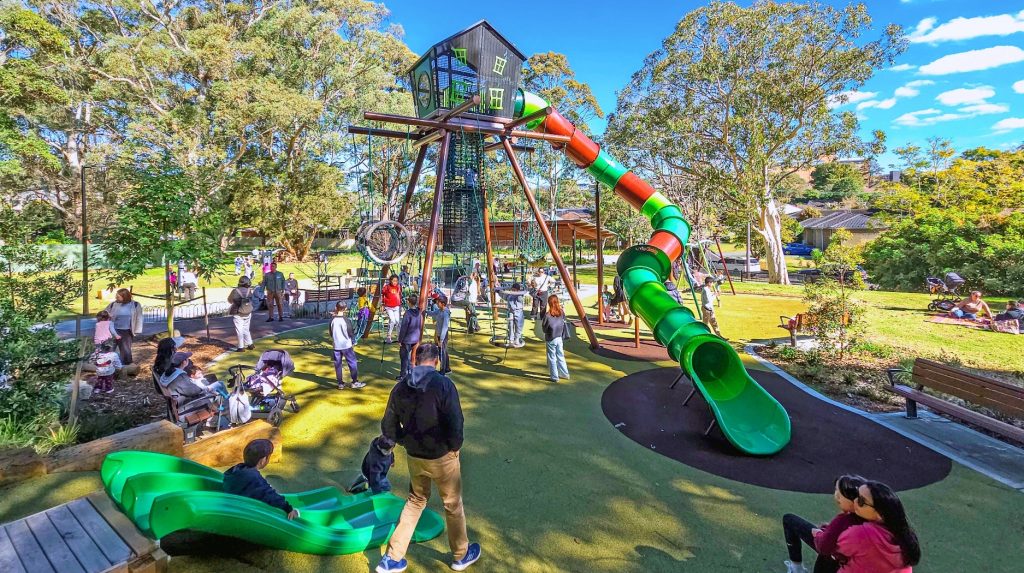
At Kilpack Park in Carlingford, New South Wales, community consultation helped shape a playground renewal project that resulted in a playspace that offered more adventure, challenge and variety for different ages and abilities.
The 7-metre Black Forest Tower creates a strong focal point, while climbing, balancing, swinging and other active play experiences offer plenty of ways for children to move, explore and build confidence. While softfall surfacing, adjacent paths and seating and shade, and landscaping combine to provide a welcoming space for families to play and socialise.
Together, these elements reflect many of the qualities captured within the Great 8™ – including enjoyment and engagement, confidence challenge, fitness and agility, social interaction and inclusive participation.
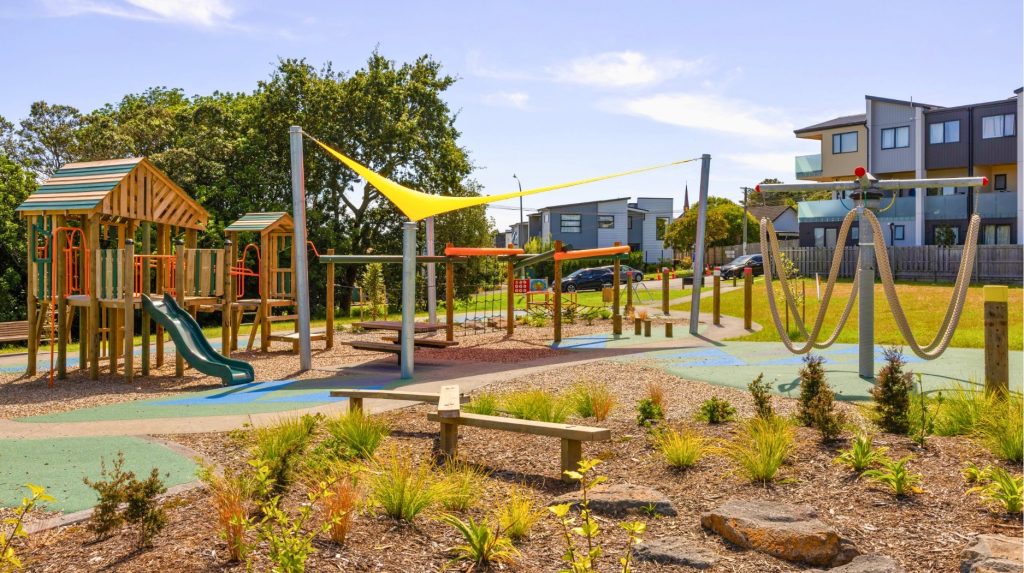
At the Koroī / Clayburn Reserve Playground in Auckland, a playground design process that prioritised local residents’ input and needs ensured this neighbourhood park has become a hub for active, social, imaginative and inclusive play for children ranging in age from toddlers to teens.
The wide range of play options gives tamariki and whānau different ways to participate, connect and enjoy the space, while creating a playground with a distinctive local identity that feels strongly connected to its community and setting.
Bring the FUNdamentals into play
Whether you’re creating a new destination playground, renewing a neighbourhood park or designing the play and recreation spaces for a residential development, the Great 8™ helps keep the whole play experience in view.
Use it to see what’s working, spot opportunities and guide early conversations around play value, inclusion, movement, challenge and connection. When the fundamentals come together, you create more than a playground – you create a place people want to explore, enjoy and come back to.
Ready to put the Great 8™ into action?
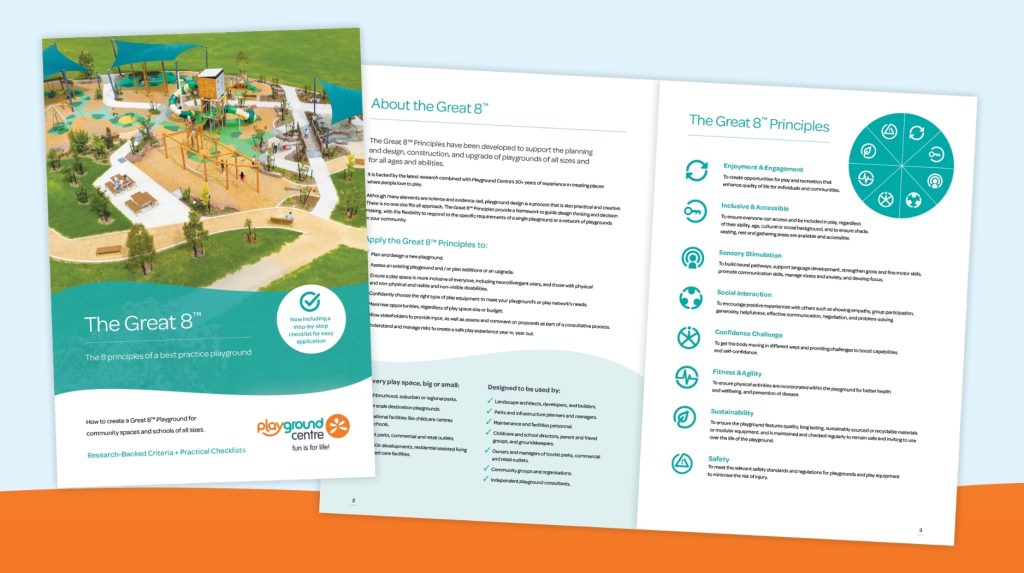
Download the Great 8™ guide to explore the eight principles, checklists and practical tools for better playspace planning.
Already working on a playground project? Book a free Great 8™ assessment and our team can help review your current concept against the principles and identify opportunities to strengthen the overall play experience.