
We all know that play is essential for keeping children active and healthy. But beyond the physical benefits, research highlights another vital role of play in childhood development: it acts as “brain food”, nourishing cognitive development in children and socio-emotional growth.
Just as a nutritionally balanced diet fuels growing bodies, a balanced “diet” of play fuels developing minds. From imaginative adventures to outdoor challenges, play helps children learn, connect, adapt and thrive – setting them up for lifelong learning and success.
Why play is brain food
Neuroscientists and child development experts agree play is not just a break from learning, it is learning. Play strengthens brain architecture, builds neural connections, and supports executive functioning skills such as memory, attention and problem solving.
At the same time, play fosters socio-emotional skills that are just as critical for success: self-regulation, resilience, communication, empathy and teamwork.
The University of Auckland’s landmark 2023 report Ahead of the Game: Why play is the key to children’s future success highlights that a well-developed brain relies on strong executive functions – the “pre-requisites for the complex skills needed” in the modern world. The report calls on schools and early childhood centres to retain a focus on play in their curricula, linking the consistent benefits found in physical and outdoor play as well as pretend and imaginary play, with the development of adaptability, motivation and resilience – skills children carry into school, work, and life.
More fuel for thought
Other recent studies from New Zealand and Australia continue to underline that play is a powerful driver of prosocial behaviour and cognitive development in children.
- Outdoor play boosts attention and cooperation. Dr. Shirley Wyver (Macquarie University, 2024) found that outdoor play improves executive functioning and prosocial behaviours, with natural environments encouraging richer social interactions.
- Active children achieve more academically and socially: The Active Bodies, Active Minds report (Sport NZ, 2025) demonstrates that children with higher levels of physical activity show improved attention, social skills, school engagement and achievement.
- Nature play strengthens resilience and focus. The Australian Institute of Family Studies (AIFS) 2024 Nature Play and Child Wellbeing report links nature-based play to improved mood, focus, concentration, and emotional regulation.
- Play matters beyond the early years. While much of the research focuses on early childhood, evidence suggests play continues to support adolescents by reducing stress, building peer connections, and strengthening problem-solving and teamwork.
Translating research into school playground design
So, what does this mean for the design of playgrounds and school playground equipment?
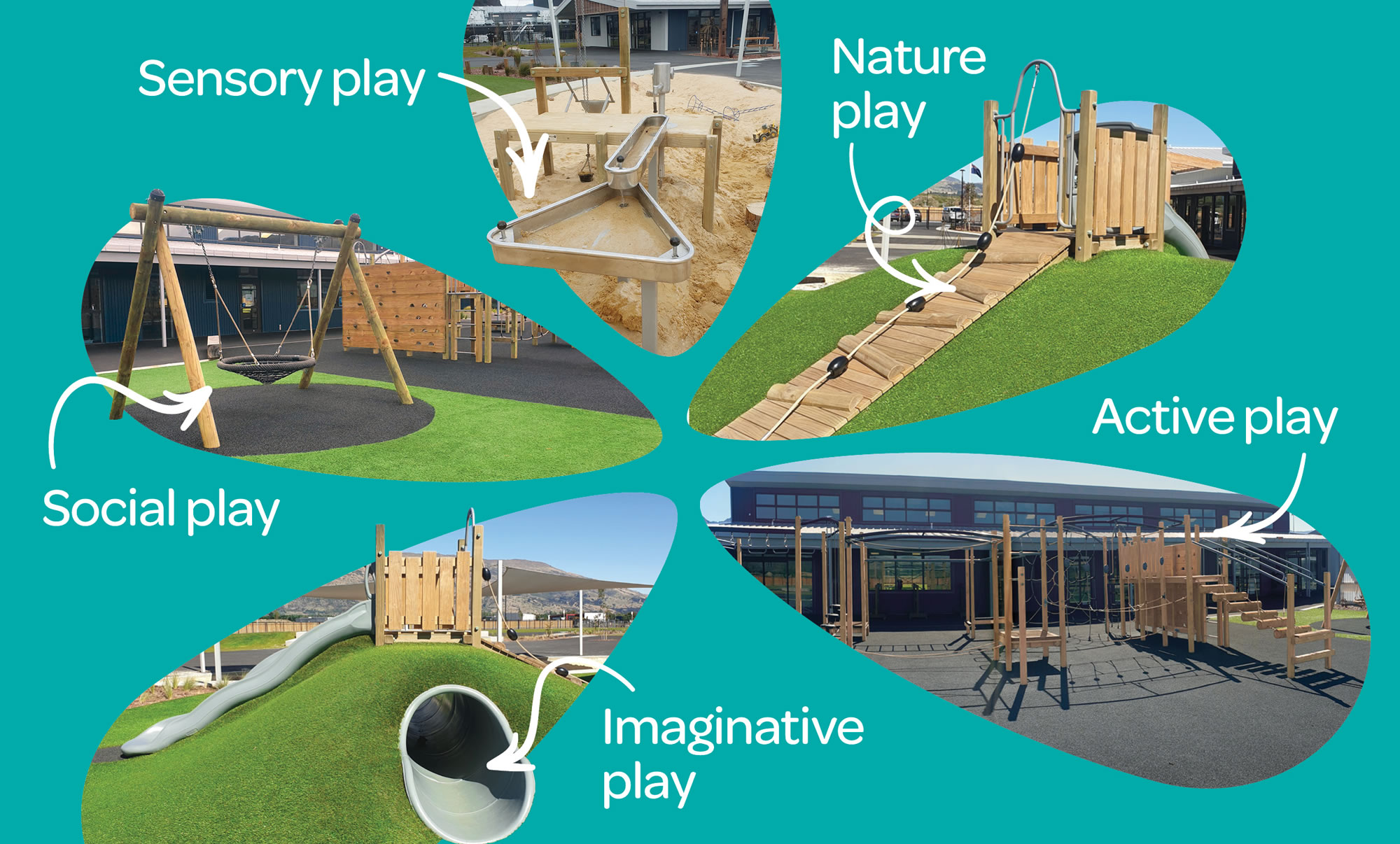
Children need a balanced menu of play opportunities, and different types of play feed different areas of development:
- Imaginative play – fuels creativity and problem-solving. Playspaces can support this through themed play structures, role-play zones, and open-ended equipment.
- Nature play – improves attention, emotional regulation, and wellbeing. Incorporating nature play equipment such as timber logs, and equipment with organic forms and natural textures helps children connect with the environment.
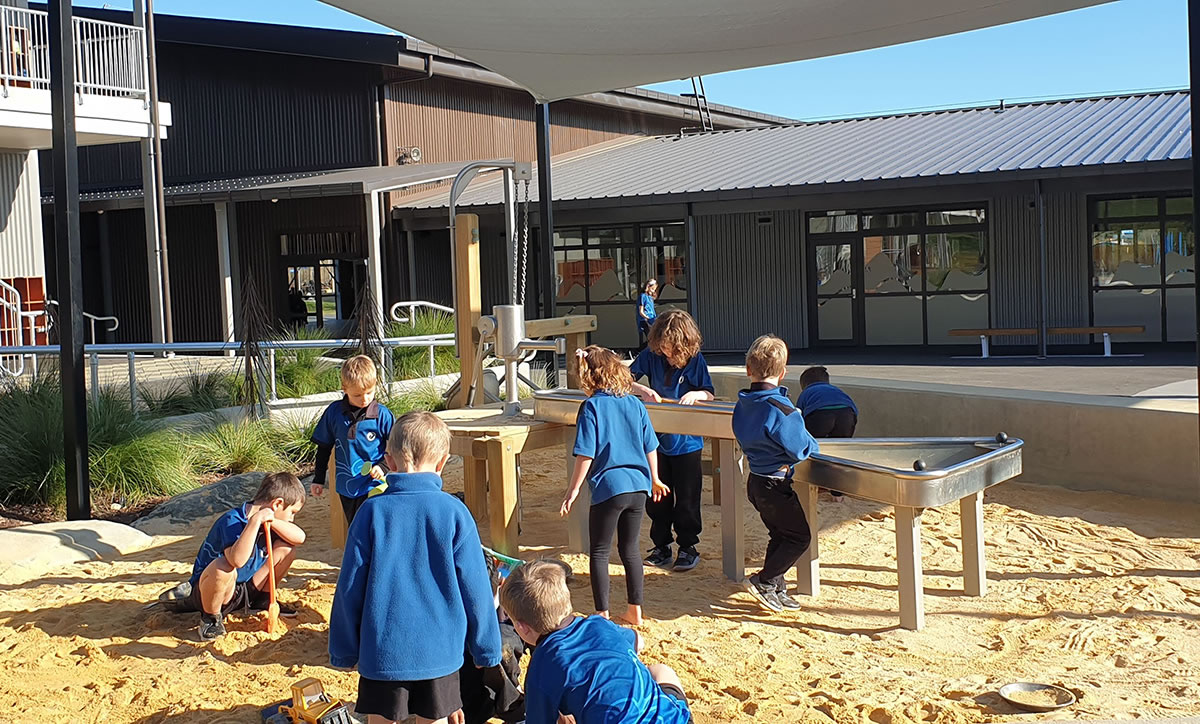
- Sensory play – strengthens processing, focus, and self-regulation. Tactile interactive play panels, sand play, and musical instruments invite children to explore with all their senses.
- Fitness play – builds resilience and executive function by encouraging persistence and problem-solving through challenge. Fitness play equipment such as obstacle courses, climbing nets, and balancing beams support this.
- Social/interactive play – develops empathy, communication, and cooperation. Group swings, seesaws and modular play structures with shared activity stations create opportunities for collaboration.
By weaving these play types together, schools can create playspaces that actively support socio-emotional and cognitive development in children alongside physical health.
Supporting every stage of development
Children’s needs change as they grow – and their playspaces need to reflect that. Every stage benefits from thoughtful school playground design that keeps cognitive and socio-emotional growth in focus:
- Early Learning Years (ages 2–5):
Sensory and imaginative play are crucial for building brain architecture and socio-emotional skills. Role-play equipment and sand and water play provide endless opportunities for exploration. - Junior School (ages 5–8):
Children are building executive function, resilience, and social skills. Climbing frames, nature play areas, and group activities support problem-solving and cooperation. - Intermediate (ages 9–12):
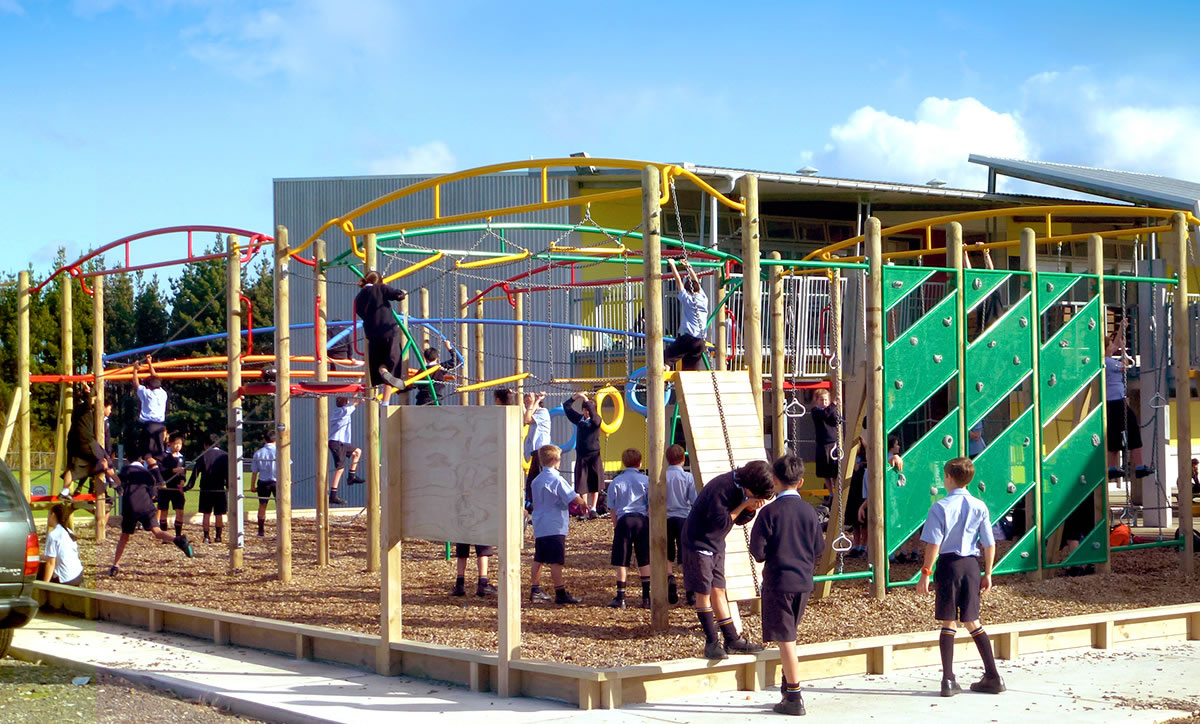
Older children thrive on challenge and teamwork. Larger-scale climbing structures, obstacle courses, and fitness play keep them engaged while building persistence and adaptability. - Senior School (ages 13+):
Play remains essential for stress relief, mental health, and peer connection. Outdoor fitness equipment, sports courts, and social gathering spaces help students balance academic pressures with wellbeing.
Actionable insights for schools
How can schools put this research into action?
- Design with balance in mind. Think of play as a balanced diet. Ensure your playspace includes a variety of play types to support different areas of development.
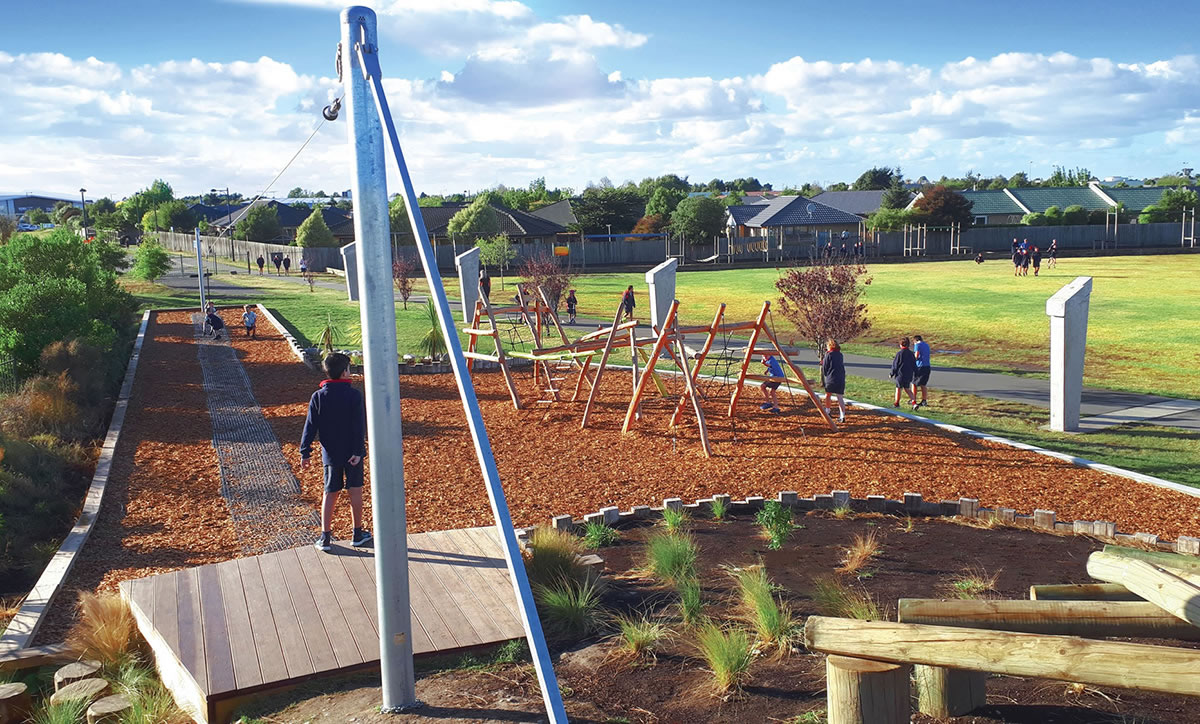
- Upgrade as well as build. Even small changes can refresh existing spaces and expand development benefits.
- Plan for progression. Ensure your playground grows with your students, offering age-appropriate opportunities for early learners through to seniors.
- Co-design with students. Particularly for older students, involving them in the process ensures spaces are relevant, engaging, and well used.
Set your school and students up for success
At Playground Centre, we design school playground equipment and playspaces that balance imagination, fitness, sensory and nature play for students of every age and stage.
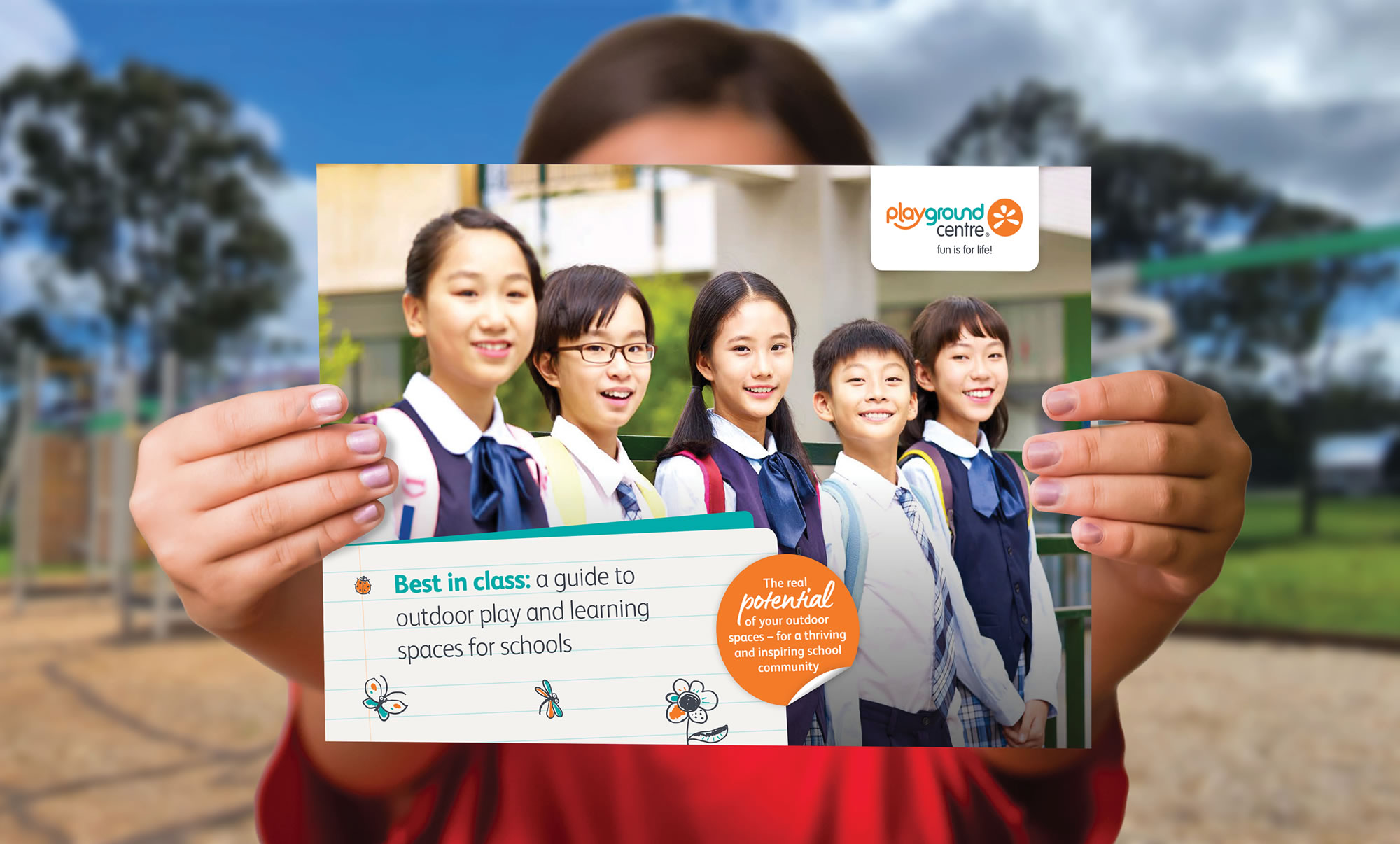
Get in touch today to talk to one of our experienced play consultants, or download Best in Class, our free guide to designing outdoor play and learning spaces that support children’s cognitive, social and emotional development.