
When every child can play together, playgrounds become spaces where empathy and inclusion flourish. Inclusive play helps shape the kind of society we want to live in – one where children of all abilities, ages, and cultural backgrounds can connect, learn, and grow together.
Playground Centre’s latest edition of the All-Inclusive Fun Handbook delves into how thoughtfully designed play environments can promote social cohesion, appreciation of diversity, and community wellbeing. Combining research, theory, and practical insights it’s an essential guide for educators, designers, and communities passionate about creating playspaces that truly include everyone.
Why inclusive play matters
Inclusive play is not merely a design choice; it’s a social imperative. Research shows that inclusive playspaces contribute to stronger communities by supporting social inclusion, and modelling kindness, compassion and respect.
As Sruthi Atmakur, a leading researcher and project lead on UNICEF inclusive play initiatives, explains, giving children with and without disabilities the chance to play together allows playgrounds to act as “joyful incubators of a more inclusive society”.
The evidence supports Atmakur’s insights. A study published in Sustainability highlights that children in inclusive playgrounds exhibit increased social interactions and demonstrate enhanced empathy and understanding toward peers with disabilities. Similarly, findings from a report featured in Frontiers in Rehabilitation Sciences indicate that inclusive playgrounds facilitate better social-emotional development and communication skills among children of diverse abilities.
Inclusive playgrounds also support intergenerational connections. Grandparents and other caregivers often play an active role in children’s lives, and inclusive playground design and inclusive playground equipment provide opportunities for shared experiences, strengthening family bonds and community ties.
Research highlights the scale of the opportunity:
- In Australia, 5.5 million people, or 1 in 5 Australians, have some form of disability.
- In New Zealand, 1 in 6 people live with a disability – 17% of the population.
- In both countries, statistics show 10% of children aged 0-14 years have a disability.
Designing playgrounds that remove the barriers to play and enable all children to play together is key – and understanding how to do this effectively is where inclusive playground design comes in.
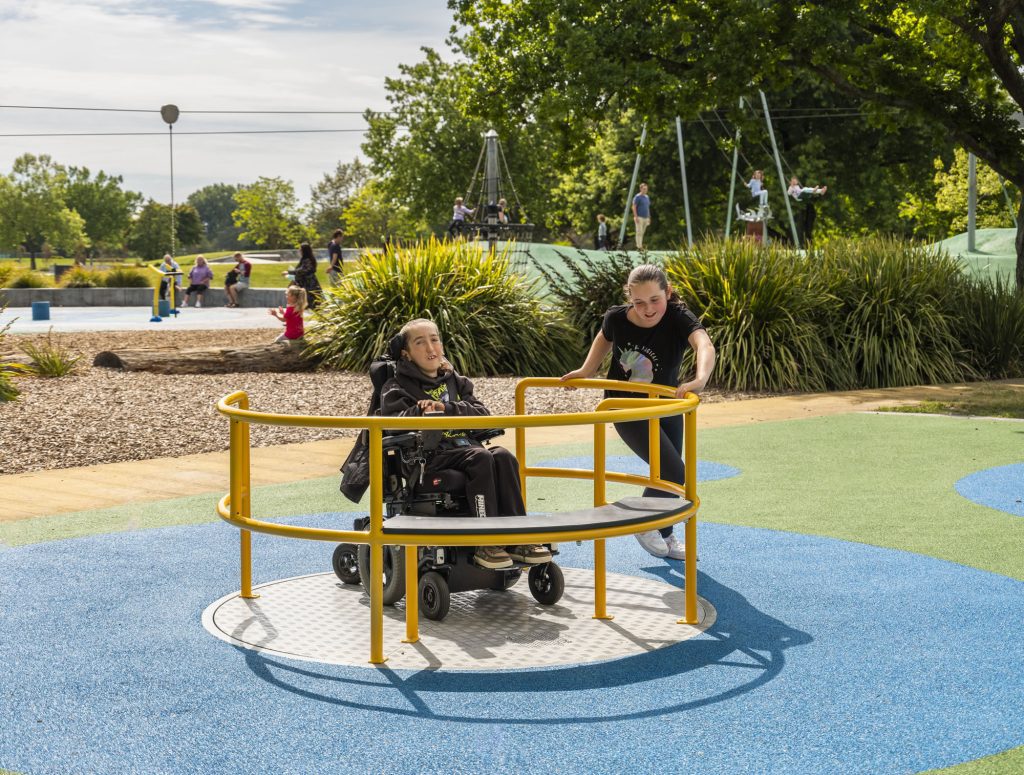
Inclusive playground design: the key principles
At the heart of inclusive playground design is universal design: removing barriers, both physical and social, that might otherwise exclude children with disabilities or difference. It embraces the principles of both inclusivity and accessibility.
Accessible playgrounds ensure:
- Pathways, surfaces, and layouts that allow ease of access and navigation
- Play areas suitable for a variety of abilities
- Accessible playground equipment for children with physical or sensory challenges.
Inclusive playgrounds go further. They create spaces where children with and without disabilities can interact and play together. Principles include:
- A variety of play experiences for diverse abilities – physical, intellectual, sensory, and psychological / emotional
- Cultural inclusivity and intergenerational play
- Safe, welcoming spaces that not only consider physical safety, but also emotional security and sensory needs.
But, truly inclusive and accessible playgrounds don’t happen by accident – they are the result of careful planning and collaboration.
According to Sport NZ, the success of inclusive spaces and places lies in the engagement of potential users with lived experience (or their advocates) and the involvement of disability experts. This is because, central to best practice inclusive playground design is consideration of the participant’s experience – their sense of comfort in the space and their ability to enjoy the experience.
A great example of this is the Tauranga Waterfront Playground, which was named Recreation Aotearoa Playspace of the Year in 2025. Children from Tauranga Special School, Greerton Village School, and Bethlehem School all played an active role in shaping the design through interactive workshops. Their ideas directly influenced key play elements, while feedback from parents and educators from Tauranga Special School helped refine inclusive features such as the incorporation of a quiet space for sensory-sensitive children.
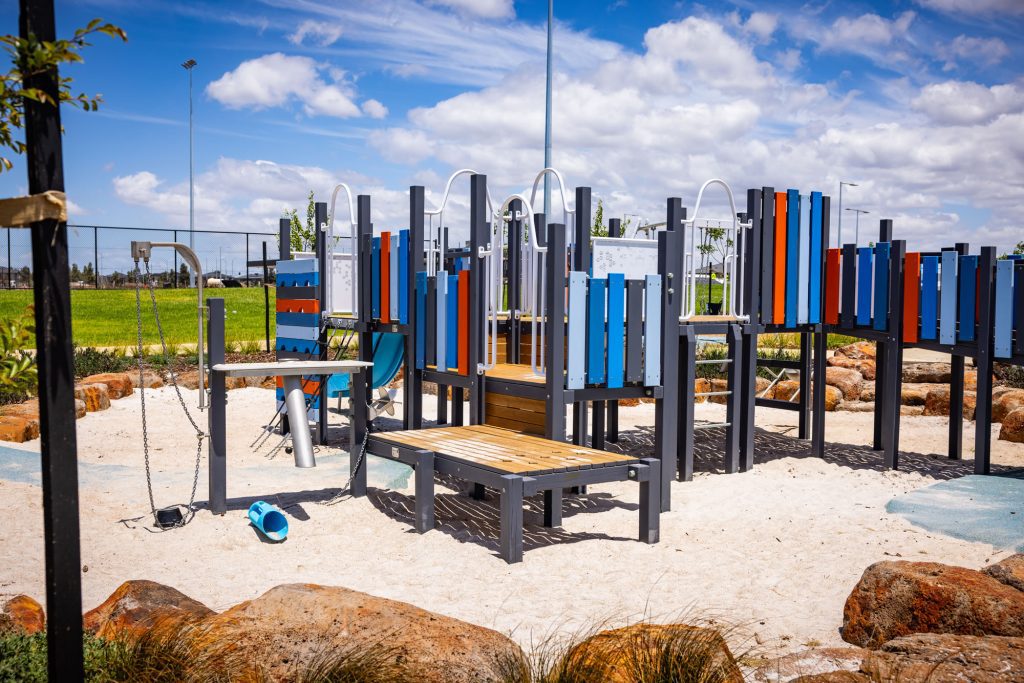
Inclusive playground equipment: making it happen
The right inclusive playground equipment enhances development, wellbeing, and social engagement, helping children:
- Learn and practice social skills
- Build confidence and resilience
- Connect across differences, fostering empathy and understanding.
From swings and adventure towers to musical instruments, sand and water play, the most recent advances in inclusive playground equipment support children of all abilities to join in the fun, and most importantly, experience the joy of playing – together.
While some pieces are designed with specific accessibility features, such as wheelchair access, others provide benefits that may not be immediately obvious but can support a wide range of needs.
For example, musical instruments such as Bongo Drums or Xylophones offer rich opportunities for children with diverse needs, including those with autism or sensory processing disorders. Children can engage solo or side by side in a non-threatening way – especially valuable for those with anxiety-related or psychosocial needs. Instruments provide a variety of visual, auditory, and tactile inputs, allowing children to regulate their own level of stimulation. They also encourage play that doesn’t rely on physical contact, which can be important for children who find touch overwhelming.
The Lazy Daisy Hammock is another wonderful example. It’s safe and secure net base moulds to the user’s body, offering comfort and support. A child and their caregiver can swing together, promoting interaction while providing supervision and reassurance. While the hammock’s gentle rocking motion delivers calming vestibular stimulation, supporting both relaxation and balance development.
What makes equipment like the Lazy Daisy Hammock special is that it doesn’t look like traditional “inclusive” equipment. This promotes genuine inclusion, as children of all abilities can enjoy it without stigma. Similarly, climbing nets or adventure towers with accessible lower-level play areas alongside more challenging high-level features allow children of different abilities to play in the same space in their own way.
The All-Inclusive Fun Handbook: your practical guide
Playground Centre’s All-Inclusive Fun Handbook combines contemporary research, theory, and practical experience to help designers, schools and communities create inclusive playspaces. The latest edition includes:
- Research-backed insights into disability types, with a special focus on autism
- The play needs of children with different abilities, and
- An expanded range of inclusive playground equipment that supports inclusive fun, and how it does it.
Whether you are planning a school playground, a playspace in a community park or public space, this handbook is an essential resource for translating inclusive playground design principles into real-world projects.
Are you ready to harness the power of inclusive play?
To bring every child into the fun and foster a stronger, more connected school or community, work with the inclusive play specialists at Playground Centre.
Get in touch today to start your inclusive play journey.